News
Yacht PMS Software: Prevent Breakdowns with AI | YachtBooks
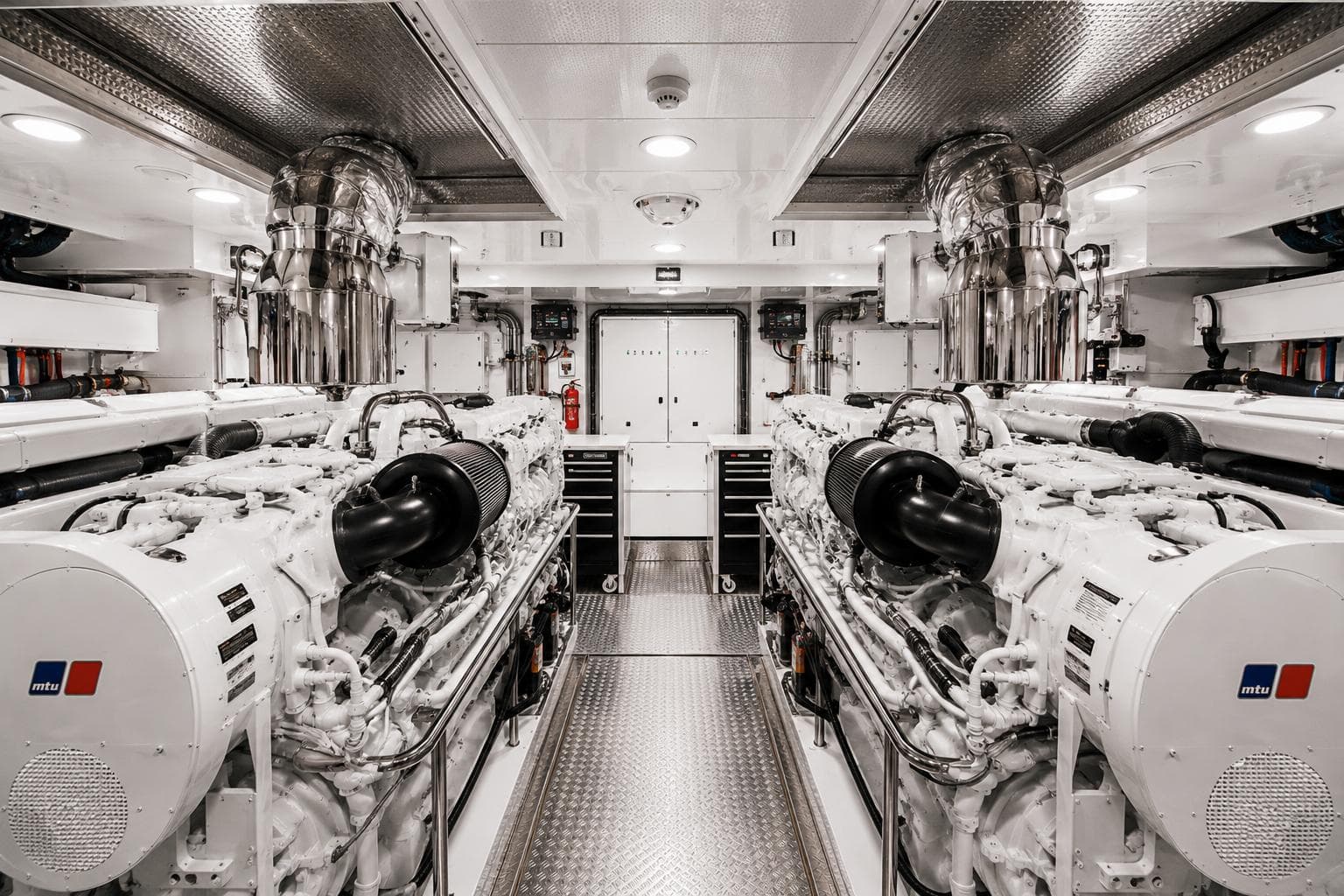
Why modern superyachts need more than maintenance checklists — and how connected PMS software, equipment tracking and AI are changing yacht engineering.
Imagine this scenario.
A 50-meter superyacht is preparing for a charter in the Mediterranean. The guests are arriving tomorrow, the crew is completing final preparations, and the engineering department is checking critical systems.
Then an unexpected problem appears.
A generator requires urgent attention. The service history is incomplete, the relevant manual is buried among hundreds of documents, and the engineer who previously worked on the equipment is no longer onboard.
Suddenly, a routine maintenance issue threatens the vessel's schedule.
For yacht owners, captains and chief engineers, situations like this illustrate why planned maintenance is not simply a technical responsibility. It is a financial and operational priority.
Modern yacht planned maintenance software helps crews organize maintenance tasks, track equipment history and identify upcoming service requirements before they become urgent.
And artificial intelligence introduces another valuable capability: faster access to the information needed to make informed maintenance decisions.
What Is a Yacht Planned Maintenance System (PMS)?
A Yacht Planned Maintenance System (PMS) is software used to schedule, record and monitor inspections, servicing and preventive maintenance across a vessel's equipment and systems.
Instead of relying on spreadsheets, paper checklists or individual crew members' memories, a PMS creates a structured maintenance record.
A typical yacht PMS helps answer essential questions:
- Which equipment requires maintenance?
- When is the next service due?
- How many running hours has the equipment accumulated?
- Who completed the previous service?
- Where are the relevant technical manuals?
- Which maintenance tasks are overdue?
A properly maintained PMS becomes a shared operational reference for captains, chief engineers, technical managers and incoming crew members.
For larger yachts, documented maintenance practices may also support applicable flag-state, classification society and safety management requirements.
However, software alone does not establish regulatory compliance. The maintenance program and records must satisfy the vessel's actual obligations.
1. Why Preventive Maintenance Matters More Than Emergency Repairs
There are two fundamentally different approaches to equipment maintenance.
Reactive maintenance means responding after a problem or failure occurs.
Preventive maintenance means performing scheduled inspections and servicing to reduce the likelihood of problems.
On a superyacht, reactive maintenance may involve much more than a replacement part.
An unexpected technical failure can create additional consequences:
- Emergency supplier and engineering costs
- Delays during charter operations
- Unplanned downtime
- Disruption to guests and crew
- Additional pressure on the maintenance budget
- Reduced availability of essential onboard systems
Preventive maintenance does not eliminate every possible failure. It helps teams address known service requirements and identify issues earlier.
The goal is to shift maintenance from a series of emergencies toward a planned, documented process.
2. Running Hours vs. Calendar-Based Maintenance
One of the most important features of professional yacht maintenance software is the ability to manage different servicing intervals.
Not every piece of equipment should be maintained according to a calendar alone.
Calendar-based maintenance
Some maintenance activities are scheduled at recurring time intervals, regardless of how frequently the equipment is used.
Examples may include periodic inspections, annual servicing and checks required by equipment manufacturers.
Running-hours-based maintenance
Other maintenance activities depend on how long equipment has operated.
Generators, main engines and auxiliary machinery may require servicing after specified running-hour intervals.
For example, a manufacturer may prescribe maintenance at a certain number of operating hours or after a defined time period, whichever comes first.
A yacht operating intensively throughout the charter season can accumulate running hours much faster than a privately operated vessel with limited annual use.
This is why effective yacht maintenance planning must account for the actual operating history of equipment.
YachtBooks PMS supports maintenance scheduling by calendar intervals and machinery running hours, helping engineering teams keep service requirements organized.
The correct maintenance intervals must always come from the relevant manufacturer's documentation and applicable technical requirements.
3. YachtBooks Vessel Pin Layout: See the Equipment, Find the Job
One of the challenges in managing a large yacht is understanding where equipment is located and how its information is organized.
Different technical systems may be distributed across the engine room, bridge, deck and other compartments.
A conventional maintenance list provides useful information, but it does not always offer immediate physical context.
YachtBooks introduces a more visual approach through its Vessel Pin Layout functionality.
Equipment and maintenance tasks can be associated with locations on the yacht's layout.
Instead of working exclusively through equipment lists, crew members can navigate the vessel visually and locate relevant technical information.
How can Vessel Pin Layout help engineers?
Imagine a new engineer joining a superyacht.
The engineer needs to review a particular pump, its previous maintenance work and the associated documentation.
With a structured vessel layout, the engineer can locate the equipment within the yacht and access the related records.
This approach is particularly useful during:
- Crew and chief engineer handovers
- Equipment inspections
- Maintenance planning
- Technical troubleshooting
- Review of previous service work
YachtBooks connects equipment locations with associated maintenance tasks, documentation and service information.
The objective is to make technical records easier to find and understand.
For yacht management companies, a consistent equipment structure can also help shore-based teams understand how maintenance information is organized onboard.
4. How AI Can Help Yacht Engineers Find Technical Information Faster
Modern superyachts contain extensive technical documentation.
Engine manuals, electrical diagrams, generator servicing instructions, hydraulic specifications and equipment maintenance procedures may be distributed across many documents.
Finding the right information can take valuable time.
This is where an AI yacht maintenance assistant becomes useful.
An AI assistant that can work with authorized technical documentation can help users locate and understand relevant maintenance instructions.
Instead of browsing a large manual page by page, an engineer might ask:
"What maintenance procedure does the uploaded manual specify for this generator?"
Or:
"Where can I find the instructions for checking the cooling system?"
AI-assisted document retrieval can make the process more efficient, especially when engineers need to navigate unfamiliar equipment documentation.
YachtBooks brings AI assistance into its wider yacht management environment, enabling users to work with relevant vessel information and maintenance records through natural-language questions.
The engineer remains responsible for checking the source documentation and confirming that the instructions match the actual equipment model.
AI is an information assistant, not a substitute for qualified marine engineering expertise.
5. From Maintenance Dashboards to Conversations With YachtBooks Intelligence
Traditional PMS software requires users to navigate equipment lists, calendars and maintenance records.
These tools remain essential, but they can be time-consuming when someone needs a specific answer.
YachtBooks Intelligence introduces another way to interact with maintenance information.
Instead of manually searching for a particular service record, an authorized user can ask:
"When was the port generator last serviced?"
Or:
"What maintenance is due next week?"
The assistant can retrieve relevant information from available YachtBooks records, subject to the user's access permissions.
This creates a more direct path between a question and the information needed to answer it.
For chief engineers, the benefit is faster access to maintenance history and upcoming work.
For captains, it is easier visibility into maintenance requirements.
For yacht management companies, it provides another way to review operational information across managed vessels.
YachtBooks Intelligence can also navigate users toward relevant records, helping them move from an answer to the appropriate page.
Discover YachtBooks Intelligence
Can AI predict equipment failures?
AI-assisted maintenance and predictive maintenance are not the same thing.
Predictive maintenance typically involves analyzing equipment condition, sensor readings, operating patterns or other relevant data to estimate when a failure may occur.
An AI assistant that answers questions about maintenance records does not automatically provide predictive diagnostics.
However, consistently maintained equipment histories, running-hour records and service information create a stronger foundation for future condition-monitoring and predictive maintenance applications.
For yacht operators, the immediate value lies in reliable maintenance scheduling, accessible records and improved operational awareness.
6. Why Maintenance and Financial Management Should Work Together
Maintenance is not only an engineering activity.
It also affects the vessel's operating budget.
A major generator service, replacement pump, technical inspection or emergency repair can introduce expenses that need to be monitored and approved.
When maintenance records and financial information are stored in separate systems, it becomes harder to understand the relationship between operational work and spending.
YachtBooks combines its Planned Maintenance System with budgeting and expense management capabilities.
This allows maintenance-related costs to be connected with the yacht's financial records and budgets.
For example, a management team can review how recorded maintenance spending compares with planned expenditure.
This supports conversations between engineering departments, captains and owners about operational priorities and financial planning.
The real value of integrated yacht management software is connecting the work being performed with the resources required to perform it.
This is especially important for multi-yacht management companies that need a consistent understanding of maintenance expenditure across their fleets.
7. Why Maintenance History Matters During Crew Changes
Crew rotation is a normal part of superyacht operations.
But technical knowledge can become fragmented when engineers leave, new crew members join or maintenance contractors change.
A departing chief engineer may understand every detail of a vessel's systems.
Without reliable documentation, that knowledge may not transfer effectively to the next person.
A well-maintained PMS reduces dependence on individual memory.
Equipment histories can provide incoming crew members with information about previous service work, upcoming tasks and outstanding requirements.
Technical manuals and supporting records also help create continuity.
For captains and yacht management companies, this makes crew handovers more structured and reduces the risk that important maintenance information is overlooked.
The PMS becomes part of the vessel's operational knowledge.
8. What Should You Look for in Yacht PMS Software?
When evaluating planned maintenance software for a yacht, consider the following capabilities.
Equipment organization
Can technical equipment be registered and organized by system and location?
Maintenance scheduling
Does the software support calendar-based and running-hours-based service planning?
Service history
Can engineers access previous maintenance work and supporting records?
Documentation
Can relevant manuals and technical information be associated with equipment?
Mobile accessibility
Can crew members access tasks and maintenance information through a practical interface while working onboard?
Financial visibility
Can maintenance expenditure be monitored alongside budgets and expense records?
AI-assisted access
Can users ask natural-language questions about their maintenance information rather than manually searching through records?
A good PMS should support the people responsible for maintenance instead of creating unnecessary administrative work.
The most effective system is the one that crews can maintain consistently and use during real operational situations.
9. Introducing YachtBooks Planned Maintenance Software
YachtBooks is an integrated yacht management platform combining operational and financial management capabilities.
Its Planned Maintenance System is designed for captains, engineers and yacht management companies.
Key capabilities include:
- Calendar-based and running-hours-based maintenance scheduling
- Equipment and maintenance task tracking
- Vessel Pin Layout for visual equipment organization
- Maintenance history and technical documentation
- Maintenance reminders and mobile PWA notifications
- Supplier, parts and maintenance-related cost management
- Integration with yacht budgeting and expense tracking
Alongside the PMS module, YachtBooks Intelligence provides a conversational way to access relevant maintenance and operational records.
YachtBooks is also built for MCP connectivity, supporting its broader vision of allowing compatible AI applications to work with authorized yacht information.
Rather than treating maintenance as an isolated engineering module, YachtBooks connects it with the wider operational and financial management of the vessel.
Explore YachtBooks Planned Maintenance Software
Frequently Asked Questions About Yacht Planned Maintenance Software
What is the best planned maintenance software for yachts?
The best yacht PMS depends on vessel size, equipment complexity, crew workflows and reporting requirements. Important features include equipment tracking, service scheduling, running-hour monitoring, maintenance history, documentation and practical mobile access. YachtBooks is one option for operators seeking a PMS integrated with yacht accounting and AI-assisted information access.
Can yacht maintenance software prevent breakdowns?
Planned maintenance software can help reduce the risk of avoidable failures by organizing scheduled servicing, monitoring maintenance intervals and preserving equipment history. It cannot guarantee that breakdowns will never occur.
How does AI help with yacht maintenance?
AI can help engineers find technical documentation, review maintenance records and retrieve information about upcoming tasks. More advanced predictive maintenance requires suitable equipment-condition data and specifically implemented analytical capabilities.
What is the difference between PMS and predictive maintenance?
A Planned Maintenance System organizes preventive maintenance according to schedules, running hours and defined servicing requirements. Predictive maintenance uses condition or performance data to estimate when equipment may require attention. The two approaches can complement one another.
Can YachtBooks track maintenance by running hours?
Yes. YachtBooks supports running-hours-based maintenance alongside calendar-based scheduling, helping engineering teams organize equipment servicing.
Can YachtBooks connect maintenance costs to budgets?
Yes. YachtBooks connects planned maintenance with its budgeting and expense management modules, enabling teams to track maintenance-related expenditure.
Is a PMS useful for yacht management companies?
Yes. A structured PMS helps management companies maintain visibility into service schedules, maintenance history and technical requirements across the vessels they manage.
The Future of Yacht Maintenance Is Connected
A successful maintenance program depends on qualified professionals, accurate documentation and consistent execution.
Technology can make those responsibilities easier to coordinate.
Planned maintenance software helps ensure that tasks and equipment histories remain organized.
Visual vessel layouts make technical information easier to locate.
AI assistants make relevant records more accessible.
Connected financial management helps owners and managers understand the costs associated with maintaining their vessels.
Together, these capabilities support a more informed approach to superyacht operations.
Preventive maintenance begins with knowing what needs attention, when it needs attention and where to find the information required to do the job.
YachtBooks brings that information into one connected yacht management environment.
Less time searching. Better maintenance visibility. More control over yacht operations.
YachtBooks — Luxury Yacht Management. Simplified.