News
What Is MCP in Yacht Management? AI Assistants Explained
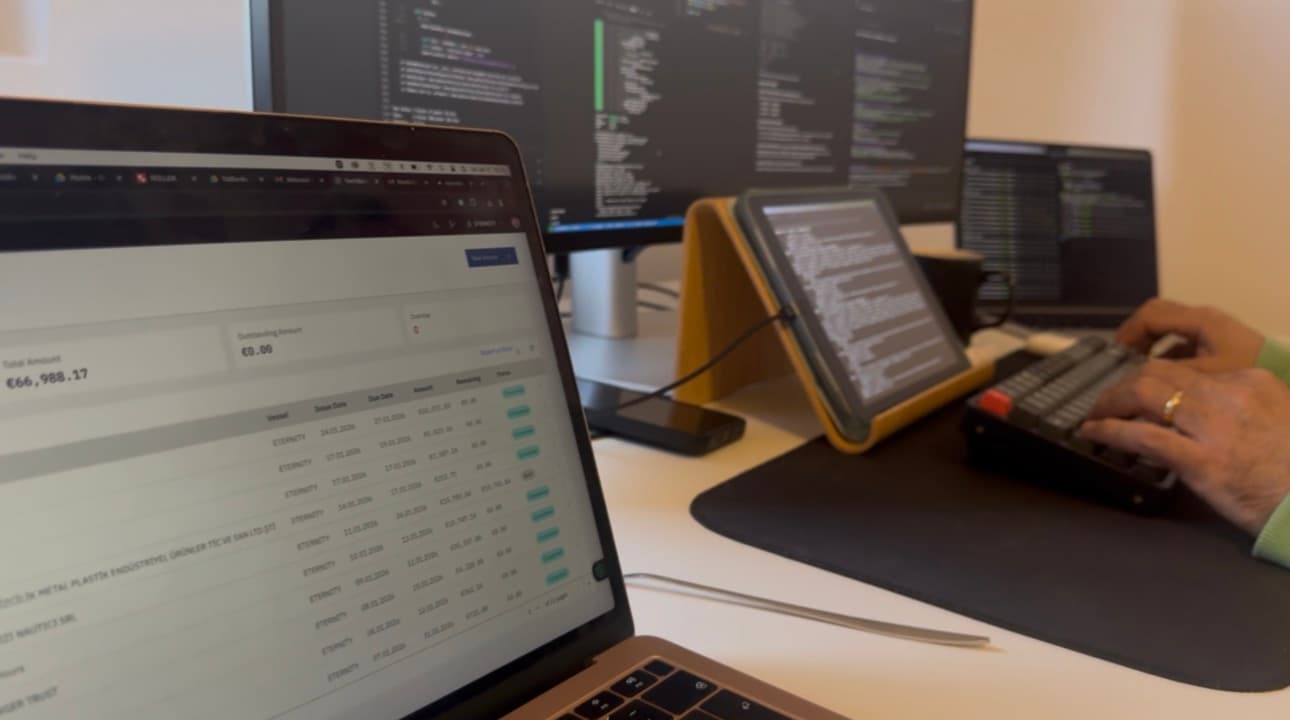
Your yacht already generates valuable information. The real question is how quickly you can access it, understand it and use it to make better decisions.
Imagine a superyacht captain starting the morning with four questions:
- Which invoices are still waiting for my approval?
- What maintenance is due this week?
- How much have we spent compared with our monthly budget?
- Which crew certificates will expire soon?
Traditionally, answering these questions means opening different modules, filtering records, checking spreadsheets and reviewing documents.
But what if the captain could simply ask an AI assistant?
This is where AI-powered yacht management software and Model Context Protocol (MCP) become particularly interesting.
By connecting artificial intelligence with authorized operational information, yacht management platforms can make data easier to access without requiring users to navigate multiple reports.
Let's explore how this technology works, what it means for superyacht operations and how YachtBooks approaches connected AI.
What Is an AI Yacht Assistant?
An AI yacht assistant is an artificial intelligence interface that helps yacht owners, captains, engineers and management companies interact with vessel information using natural language.
Unlike a general chatbot, an AI yacht assistant can be connected to a yacht management system containing operational and financial records.
This distinction is important.
A general-purpose AI model can explain what planned maintenance means. But without access to your yacht's records, it cannot reliably tell you when your actual generator was last serviced.
A connected AI assistant can retrieve relevant information from an authorized source and present it in an understandable format.
For example, instead of manually navigating a budgeting dashboard, a captain might ask:
"How much have we spent on maintenance this month compared with the approved budget?"
The assistant can use available financial records to help answer the question.
The underlying accounting system remains responsible for storing and organizing the data. AI provides a more conversational way to access it.
What Is MCP (Model Context Protocol)?
Model Context Protocol (MCP) is an open standard that enables AI applications to connect with external data sources, tools and software systems.
It allows compatible AI assistants to access information through defined integrations rather than relying entirely on what the model already knows.
For yacht management, this opens the possibility of connecting AI applications with the information managed by platforms such as YachtBooks.
Consider the difference:
Without connected AI:
A captain opens yacht management software, finds the maintenance module, selects equipment, checks previous service records and reviews upcoming jobs.
With a connected AI assistant:
The captain asks:
"When was our port generator last serviced, and what maintenance is coming next?"
An authorized integration can retrieve the available maintenance records and help the AI assistant formulate an answer.
MCP does not replace the yacht management platform, and it is not an AI model itself.
It provides a standardized connection between compatible systems.
For a detailed technical explanation, see the official Model Context Protocol documentation.
How MCP Works With Yacht Management Software
The concept can be understood through three components.
1. The AI application
This is where the user asks a question.
Examples of AI applications that support MCP include ChatGPT and Claude, depending on the application and connection configuration.
2. The MCP connection
The MCP integration exposes specific approved information or tools to the AI application.
This could include access to defined financial records, maintenance information or other operational data.
The precise capabilities depend on what the software provider implements.
3. The yacht management platform
The original information remains in the management system.
For YachtBooks, this includes information managed across budgeting, expenses, crew, maintenance and other available modules.
A properly designed integration checks authorization before returning information or performing permitted operations.
The result is a more connected workflow, allowing users to interact with their operational data through compatible AI interfaces.
Five Practical Ways AI Can Help Superyacht Operations
The benefits of AI become more meaningful when they are connected to actual work onboard.
1. Budget Monitoring Without Opening Multiple Reports
Managing a yacht's annual budget requires visibility into fuel, provisioning, maintenance, crew-related costs and unexpected expenses.
A yacht owner might ask:
"Which expense categories exceeded their planned budgets this month?"
With access to the appropriate financial records, an AI assistant can help identify relevant differences and explain them.
For fleet management companies, similar questions can be applied across several vessels, subject to the user's permissions.
This makes financial reporting more accessible to both operational and non-technical users.
2. Planned Maintenance and Equipment History
A superyacht chief engineer needs reliable information about machinery, running hours, previous maintenance and upcoming service work.
A connected AI assistant can help retrieve available service records.
For example:
"When was the stabilizer system last serviced?"
Or:
"Show me the maintenance tasks scheduled for next week."
YachtBooks includes a Planned Maintenance System (PMS) with equipment history, task scheduling and vessel pin layouts linking equipment to its physical location.
Combining structured PMS information with conversational access can reduce the time required to locate relevant records.
However, AI-generated explanations must never replace manufacturer instructions, engineering judgment or safety procedures.
3. Invoice Approvals and Expense Tracking
Superyacht expenses can originate in different countries, currencies and departments.
A captain may purchase supplies in France, order replacement parts in Italy and settle marina expenses in Türkiye.
YachtBooks supports multi-currency expense tracking and AI-assisted receipt and invoice processing.
Its OCR functionality helps extract information from photographed documents and populate expense records.
YachtBooks Intelligence can also help users access financial information conversationally.
A captain can ask:
"Which invoices are still awaiting my approval?"
Instead of searching manually, the user can be directed toward the relevant records.
AI assistance does not eliminate financial approval controls. Those controls remain an essential part of accountable yacht operations.
4. Crew Documents and Expiry Monitoring
Crew management involves contracts, certifications, leave records and documentation with different renewal dates.
An AI assistant connected to authorized crew records can help answer questions such as:
"Which crew certificates are expiring soon?"
For busy yacht managers, this reduces the need to inspect every crew profile individually.
It also supports better preparation for operational deadlines, crew changes and document reviews.
Sensitive personnel information still requires appropriate access restrictions.
5. Multi-Yacht Fleet Visibility
A yacht management company may oversee several vessels, each operating in different locations with separate budgets and maintenance schedules.
A fleet manager might ask:
"Which yachts are currently over budget?"
Or:
"Compare fuel spending across the fleet."
When financial and operational records are consistently structured, AI can help authorized users retrieve comparisons without manually compiling multiple spreadsheets.
This is one reason the integration between financial and operational information matters as much as the AI interface itself.
YachtBooks Intelligence: From Reporting to Conversation
YachtBooks is designed to bring yacht operations into one connected management environment.
The platform supports budgeting, expense tracking, planned maintenance, crew management and document organization.
YachtBooks Intelligence adds a conversational interface that helps users ask questions about their operational data.
Different users can focus on different priorities.
- A yacht owner may want to understand annual spending.
- A captain may need to review pending invoices.
- A chief engineer may want to find equipment service records.
- A management company may need financial visibility across multiple yachts.
Rather than expecting everyone to navigate the same reports, YachtBooks Intelligence helps users find information through natural-language questions.
The platform also supports navigation to relevant records, helping shorten the path between identifying an issue and reviewing its details.
Why MCP Matters to the YachtBooks Vision
YachtBooks is built for MCP connectivity, allowing the platform to participate in a broader ecosystem of compatible AI applications.
With properly configured integrations and permissions, this approach can allow owners and managers to work with authorized YachtBooks information through familiar AI environments, including supported ChatGPT or Claude configurations.
This does not mean every external AI application has unrestricted access to yacht data.
Available functions depend on the integration, the connected application and the permissions granted.
The objective is to give users more flexibility while keeping the yacht management platform as the structured source of operational information.
Explore YachtBooks Intelligence.
Is MCP Secure for Confidential Yacht Information?
Security is especially important in the superyacht industry.
Operational records may contain confidential information relating to crew, expenses, ownership structures and technical systems.
MCP is a connectivity standard, not a guarantee of security by itself.
A secure implementation requires authentication, authorization, appropriate limits on accessible information and suitable controls for sensitive operations.
When evaluating an AI-connected yacht management system, organizations should establish:
- Which users and AI applications are authorized to connect.
- Which vessel records each connection may access.
- Whether the integration is read-only or supports specific actions.
- Which operations require human confirmation.
- How access can be monitored and revoked.
YachtBooks provides role-based access controls and separates organizations' data within its platform.
The principle is that an AI integration should respect the access boundaries established for the underlying application.
Connecting software to AI should never mean abandoning financial accountability, operational oversight or data confidentiality.
Can AI Eventually Take Actions in Yacht Management Systems?
AI assistants are evolving beyond answering questions.
Through tools and authorized integrations, AI applications can potentially support actions within connected software.
For yacht management, possible future workflows include preparing maintenance requests, drafting reports or initiating administrative processes for human review.
However, the ability to perform any specific action depends on the tools that have actually been implemented and authorized.
It is important to distinguish between retrieving information, navigating to a record and modifying operational data.
For example, locating an overdue invoice is different from approving or paying it.
Similarly, identifying an upcoming maintenance task is different from confirming that technical work has been completed.
These distinctions are fundamental to responsible AI adoption in yacht operations.
How to Choose an AI-Ready Yacht Management Platform
AI should not be evaluated in isolation.
A sophisticated chatbot provides limited operational value when the underlying information is incomplete, fragmented or unreliable.
Before adopting an AI-enabled yacht management system, owners and managers should assess five things:
- Data quality: Are budgets, expenses, equipment records and documents maintained in a consistent structure?
- Operational coverage: Does the platform support the workflows your captains, engineers and shore-based teams actually use?
- Integration capabilities: Can the platform connect to compatible AI systems and other applications through appropriate APIs or standards such as MCP?
- Security: Are access permissions enforced consistently, including through connected tools?
- Practical usability: Can users retrieve meaningful information quickly without becoming dependent on complicated prompts or technical knowledge?
The most valuable AI feature is the one that helps a professional complete a real task more efficiently.
Frequently Asked Questions About AI and MCP in Yachting
Can ChatGPT connect to yacht management software?
Yes, technically, compatible ChatGPT configurations can connect to external software through supported integrations, including MCP-based connections. Actual access depends on the yacht management platform, connection availability, authentication and permissions.
Does YachtBooks have an AI assistant?
Yes. YachtBooks Intelligence is the platform's AI assistant for asking natural-language questions about relevant yacht information, including budgets, invoices, crew records and planned maintenance.
Is MCP the same as an API?
No. An API defines how software systems can interact, while MCP provides a standardized way for AI applications to discover and use exposed tools and information. MCP servers can use existing APIs behind the scenes.
Can AI replace a yacht captain or chief engineer?
No. AI can assist with retrieving information, preparing summaries and simplifying administrative workflows. Navigation, safety, engineering and operational decisions remain the responsibility of qualified professionals.
Can YachtBooks support multiple yachts?
Yes. YachtBooks is designed for individual yachts and fleet management organizations, with financial and operational information organized across vessels and controlled through user permissions.
Why is MCP important for the future of yacht management?
MCP can reduce the complexity of connecting AI assistants to business systems. In yacht management, this creates opportunities to work with budgets, maintenance records and operational data through compatible AI applications without building every connection from scratch.
The Future of Yacht Management Is Not Another Dashboard
Yacht management software has traditionally focused on organizing information.
AI introduces a different way of interacting with that information.
Instead of asking professionals to spend more time navigating software, connected AI systems can help them find relevant answers, locate records and understand operational information.
MCP contributes to this evolution by providing a standardized approach to connecting compatible AI applications with external systems.
For yacht owners, captains and management companies, the long-term opportunity is not simply to adopt more technology.
It is to make existing information easier to use.
YachtBooks brings financial and operational management together with an AI-first vision of more connected yacht operations.
Your yacht has the data. Make it easier to use.
Discover YachtBooks and request a personalized demo.
YachtBooks — Luxury Yacht Management. Simplified.